n
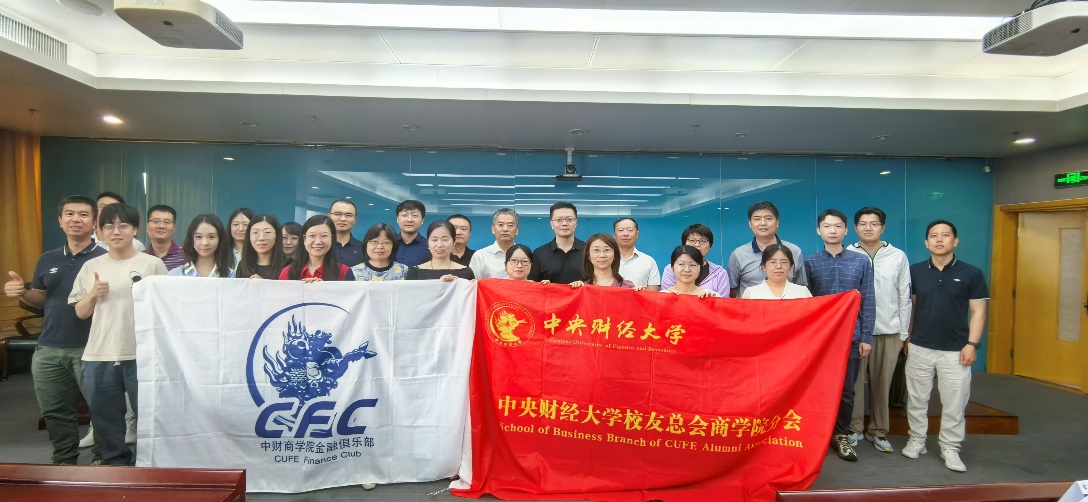
On June 15, 2025, the "China's Macroeconomic Development Trends & Global Gold Market Investment" Themed Sharing Session, hosted by the Business School Chapter of CUFE Alumni Association and organized by the Business School Finance Club, was successfully held. Nearly 40 participants attended the event, including graduate alumni of CUFE Business School from different years, majors and occupations, as well as current students.
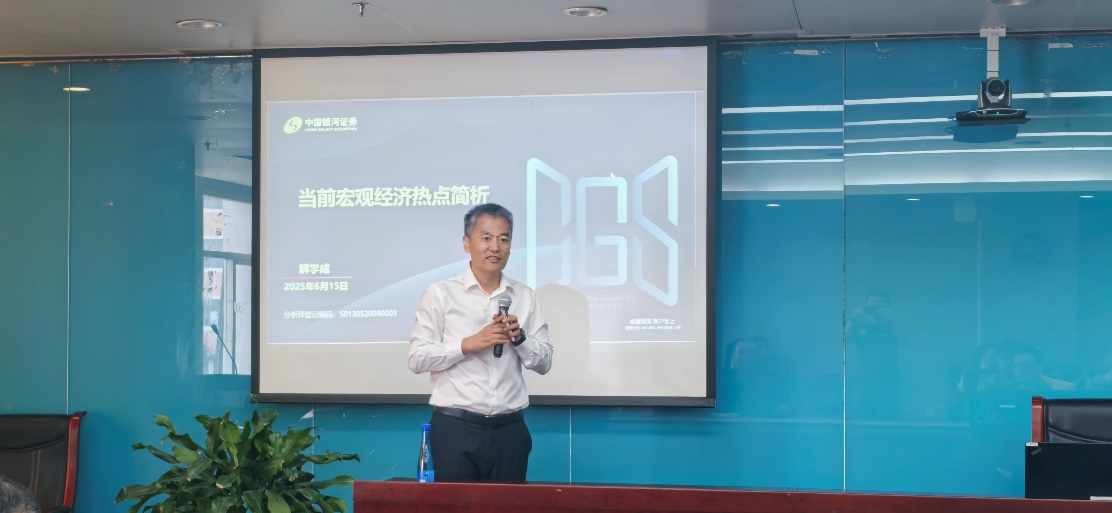
Xie Xuecheng, Vice President of China Galaxy Securities Research Institute, gave a sharing titled "2025 China's Macroeconomic Situation and Future Trend Outlook". He elaborated from three aspects: the U.S. economy, the domestic economy, and a brief analysis of policies. He focused on explaining that the U.S. economy faces many challenges in the complex international environment, China's economy has shown strong resilience amid global economic fluctuations, and China's policy responses to issues such as insufficient domestic demand, addressing uncertainties, and preventing risks to stabilize expectations.
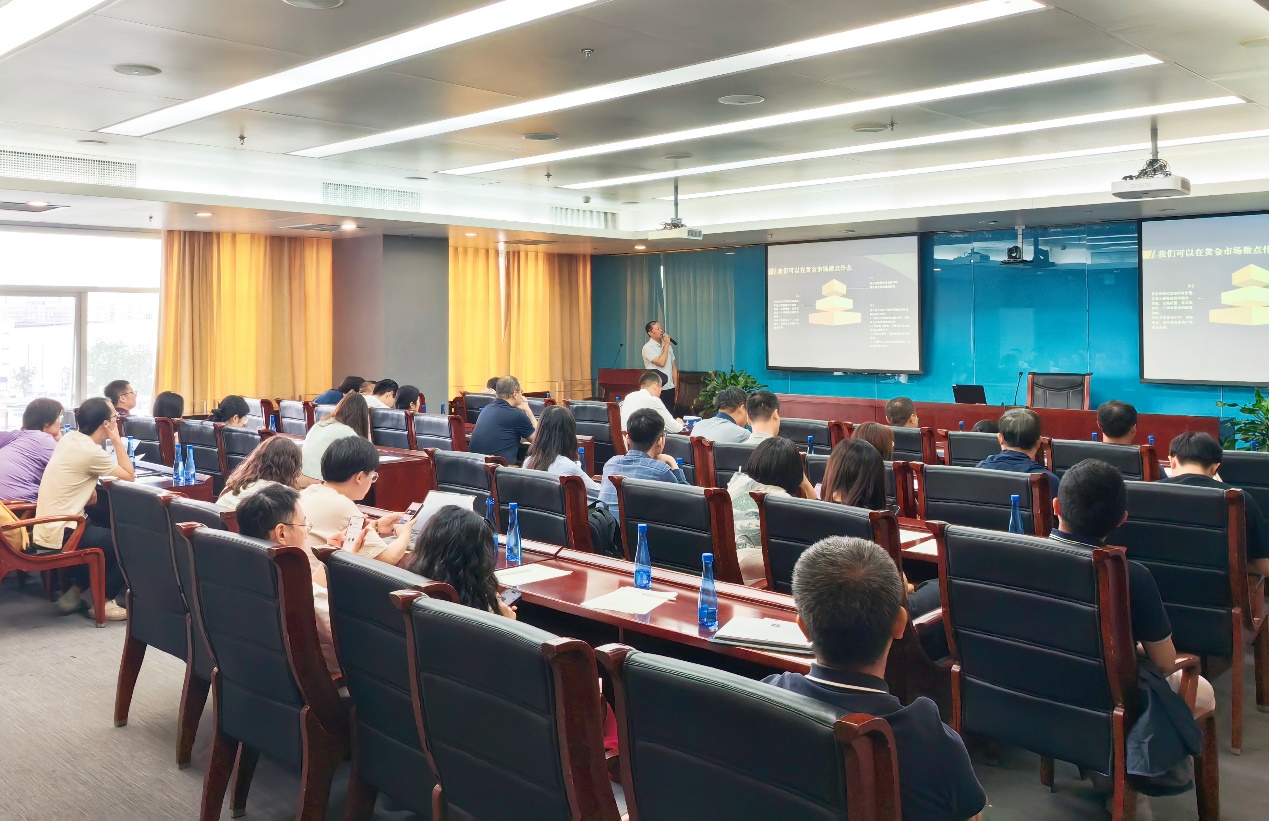
Yan Jia, General Manager of Beijing Shenhaishi Investment Consulting Co., Ltd., delivered a sharing themed "2025 Global Gold Market Development and Investment Strategy Analysis". He explained the development of the gold market and investment strategies, focusing on interpreting the long-term trend of the gold market, the causes of several major gold price fluctuation trends, the current basic pattern of the gold market, the main driving factors of the current gold market, and the possible future trend of the gold market.

During the exchange session, alumni raised questions around cutting-edge financial topics such as China's macroeconomic development situation and the gold market, and the guests answered them patiently. The discussion focused on structural contradictions during the shift of macroeconomic growth, the transmission mechanism of monetary policy, and the direction of fiscal policy efforts. At the same time, combined with the attribute of gold as a safe-haven asset, it in-depth analyzed the impact of geopolitical conflicts, the shift of the Federal Reserve's monetary policy, and the global central bank gold purchase trend on gold prices. Regarding the linkage between industrial chain restructuring and gold investment logic in the process of economic recovery, alumni were inspired to think deeply about macro data interpretation, market sentiment capture, and asset allocation strategies, and their understanding of industry trends and investment logic was deepened through the collision of viewpoints.
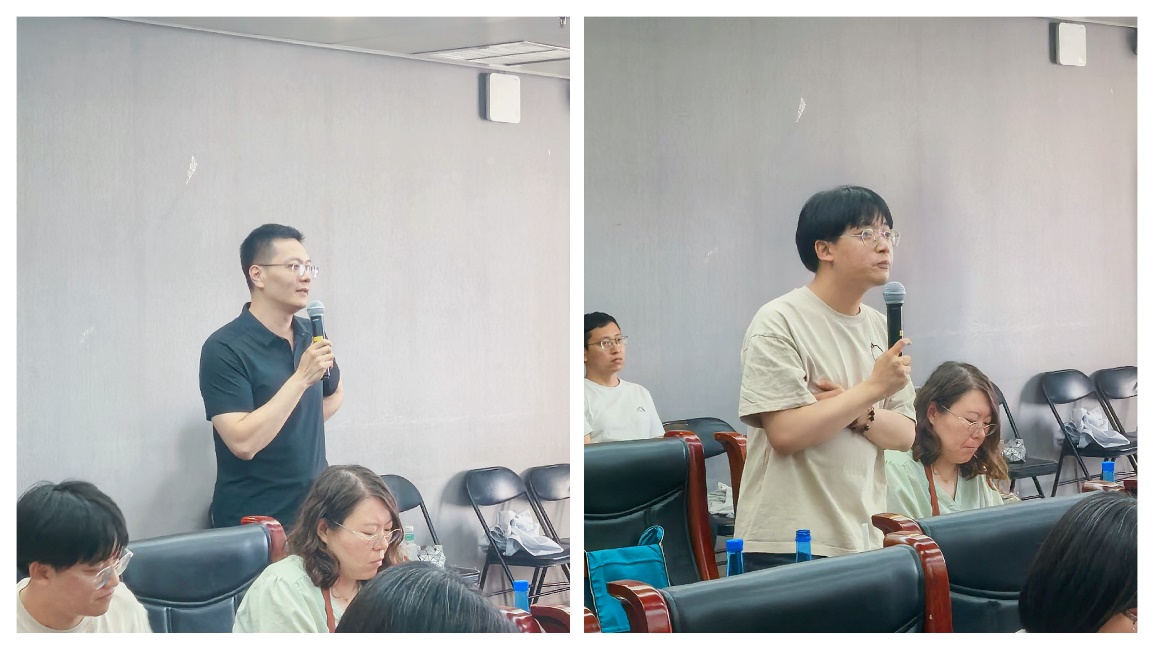
In this financial forum, alumni not only focused on cutting-edge financial topics such as China's macroeconomic development trends and gold market investment, and in-depth discussed industry trends and investment logic, but also sparked ideological inspiration through the exchange of viewpoints and gained professional insights. While analyzing the financial pattern, identifying market opportunities, and deepening cognitive understanding, the event enhanced the exchange and cooperation among financial practitioners, scholars, and alumni, and strengthened the emotional bond between alumni and their alma mater. In the future, the Alumni Chapter and the Business School Finance Club will continue to collaborate, and help the growth of alumni and the development of the school by organizing activities such as enterprise visits, themed forums, and industry salons.